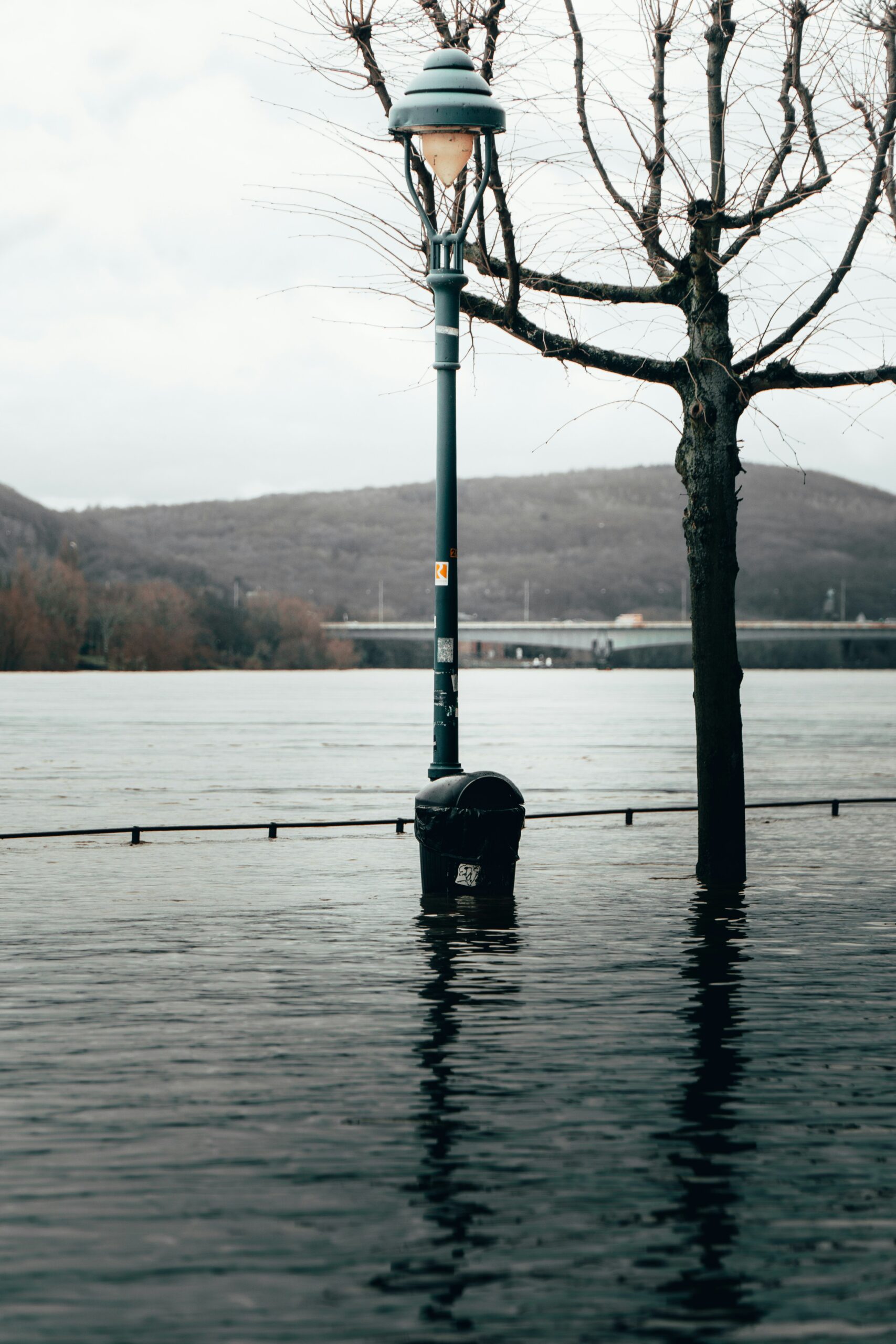
Rivers are never truly still. Even on calm days, they are carrying stories downstream: rain from faraway hills, melted snow from high ridges, fallen leaves, silt, seeds, fish, driftwood, and the slow memory of the land itself. A river is movement. It bends, swells, carves, nourishes, retreats, and returns. And sometimes, there’s a natural flood.
For many of us, the word “flood” immediately brings images of disaster: homes underwater, roads washed out, fields ruined, communities displaced. Those floods are serious, and they deserve respect. But flooding is also one of the oldest natural processes on Earth. Long before levees, dams, streets, and subdivisions, rivers regularly spilled beyond their banks and spread across the lowlands around them.
That natural rhythm shaped valleys, built fertile floodplains, fed wetlands, refreshed forests, and created habitat for countless species.
So what actually happens when a river floods naturally?
First, the River Runs Out of Room
A natural flood begins when more water enters a river system than the channel can hold. Extra water spills in from heavy rainfall, rapid snowmelt, seasonal storms, saturated soil, or creeks feeding into the rivers.
As water levels rise, the river moves faster and grows wider. Eventually, it reaches the top of its banks. Once it passes that point, the river begins to spill outward onto the surrounding floodplain.
A floodplain is exactly what it sounds like: the flat or low-lying land beside a river that has been shaped by past floods. It is not separate from the river. It is part of the river’s larger living system.
In a natural landscape, the floodplain acts like a pressure valve. Instead of forcing all that water through one narrow channel, the river spreads out, slows down, and releases energy across a wider area.
The River Spreads Nutrients Across the Land
When a river floods naturally, it does more than move water. It also carries sediment that includes tiny particles of soil, sand, silt, clay, and organic matter. During a flood, the river lifts and transports these materials downstream. As floodwater spreads across the land and slows, it drops some of that sediment behind.
This is one reason river floodplains are often sooo fertile.
Natural flooding can deposit nutrient-rich material across forests, meadows, wetlands, and agricultural land. Over time, these deposits help build deep, productive soils. Some of the world’s earliest farming civilizations grew along rivers because seasonal flooding renewed the land year after year.
The river, in its own muddy way, composts the valley.

Wetlands Get Recharged
Wetlands are some of the hardest-working ecosystems on the planet, and natural river flooding helps keep many of them alive.
When floodwaters spread into marshes, sloughs, backwaters, oxbows, and bottomland forests, they refill shallow basins and reconnect isolated pools. This recharge supports plants, insects, amphibians, fish, birds, and mammals.
Wetlands also return the favor.
They help absorb floodwater, slow its movement, filter pollutants, trap sediment, and provide nurseries for wildlife. A healthy wetland can act like a sponge, holding water during wet periods and slowly releasing it over time.
In other words, a river flood is not always a breakdown of order. In a natural system, it is often part of the order.
Fish and Wildlife Find New Opportunities
For river creatures, flood season can open doors or, more accurately, waterways.
When a river rises and connects with its floodplain, fish may move into newly flooded areas to feed, spawn, or find shelter. Shallow floodplain waters can be warmer, calmer, and rich with insects, plant matter, and microscopic life.
Birds may follow the water, too. Herons, egrets, ducks, geese, kingfishers, and shorebirds often benefit from flooded wetlands and backwaters. Mammals may shift to higher ground while still relying on the floodplain’s burst of new growth after the water recedes.
Even trees have adapted to this rhythm. Species like cottonwood, willow, silver maple, and cypress often thrive in floodplain environments. Some need periodic flooding to create the bare, moist soil where seedlings can take root.
A natural flood rearranges the neighborhood, but many river species know how to use the change to their advantage.
The River Reshapes Its Own Path
Rivers are builders as much as they are movers.
During a natural flood, fast-moving water can erode banks, carve new channels, move sandbars, deposit gravel, and reconnect old river bends. Sometimes floods create or refresh features like: sandbars, side channels, oxbow lakes, backwater pools, gravel beds, and natural levees.
This shifting may look messy, but it creates habitat diversity. A straight, uniform river channel supports fewer kinds of life than a river with bends, shallows, pools, riffles, islands, and backwaters.
The river’s restlessness is part of its richness.
Plants Get Pruned, Planted, and Renewed
Floods can be tough on plants, especially those not adapted to wet conditions. But in native floodplain ecosystems, many plants are built for periodic high water.
Flooding may knock down weak trees, carry away dead vegetation, spread seeds, and create open patches where new growth can begin. Some seeds travel by water and settle in fresh sediment after the flood recedes.
This process helps maintain a shifting mosaic of plant communities. One area may become a young willow thicket. Another may grow into a mature bottomland forest. Another may remain a marshy opening.
The floodplain changes because the river changes. That variety is good for biodiversity.

Natural Flooding Is Different From Flood Disaster
It is important to make a distinction: natural flooding is a normal river process, but flood disasters often happen when human communities are placed in harm’s way or when river systems have been heavily altered. Things become dangerous when homes are built in flood-prone areas, wetlands are drained, rivers become confined by concrete, and when forests are removed.
Natural floodplains give rivers room to spread out. When that room disappears, floodwater may rise higher, move faster, or cause greater damage elsewhere.
This does not mean people should simply “accept” dangerous flooding. It means that working with rivers — rather than against them — can often make communities safer and ecosystems healthier.
Restoring wetlands, protecting floodplains, planting native vegetation, and making careful choices about development can all reduce flood risk while respecting the river’s natural behavior.
After the Water Recedes
A natural flood does not end the moment water levels drop.
Afterward, the floodplain is often transformed. Mud may coat the ground. Driftwood may rest in tree branches. New pools may shimmer in low places. Seeds may sprout in fresh silt. Fish may return to the main channel as water drains back. Birds may arrive to feed in the newly exposed shallows.
What looks like aftermath is also a beginning.
The river has delivered nutrients, rearranged habitat, replenished wetlands, and reminded the landscape of its connection to water.
Flooding is one of the ways a river remembers its full shape.
Living With the River’s Rhythm
At Riverfolk Co., we believe rivers are more than scenery. They are living systems, cultural pathways, wildlife corridors, sources of food and work, places of memory, and teachers of patience.
A naturally flooding river shows us something essential: water needs space.
It is stretching into its ancient boundaries.